Week 2: Beauty
(Is there a way to make a definition of universal beauty that isn't ethnocentric, elitist, racist, sexist etc? How so?)
I don't believe so.
I don't believe so.
As a whole, the "Idea of Beauty" is different between cultures. It also is based in the idea of "haves" and "have-nots." Finally, it's not concrete-- it's definition and features it values are ever changing.
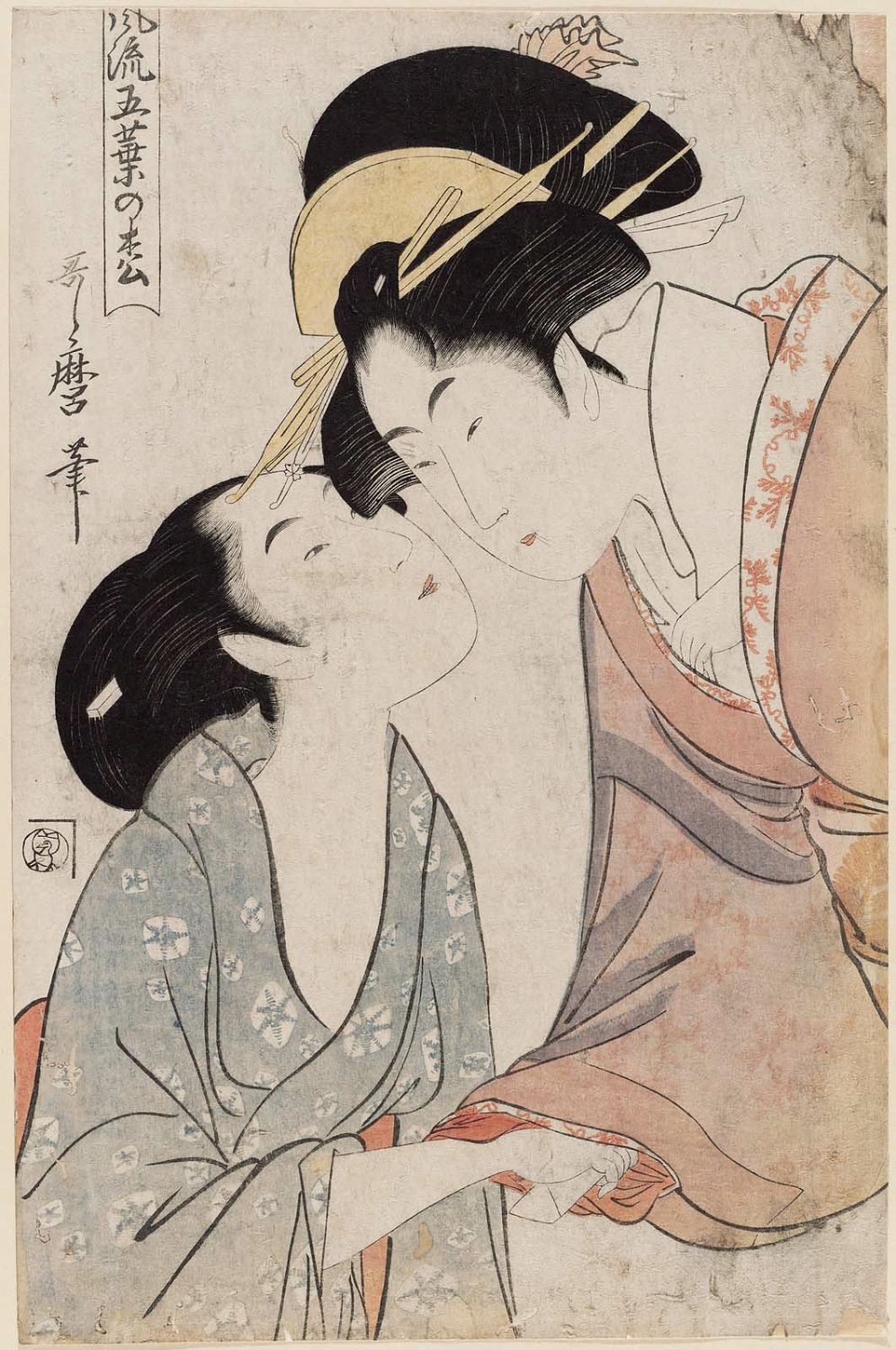 |
| Furyu Goyo no Matsu(Maid Passing a Letter), Kitagawa Utamaro, Woodblock Print, 1797-1798 CE, Image by Museum of Fine Arts via Ukiyo-e Search |
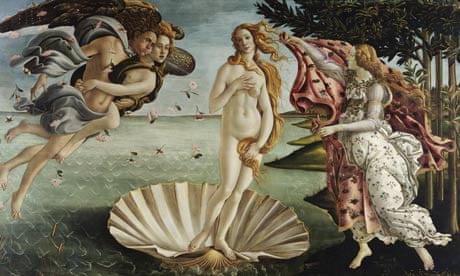 |
| The Birth of Venus, Sandro Botticelli, Tempera on Canvas, 1484-1486 CE, Image by Google Art Project, Altered (Value Corrected) by Wikimedia |
| Mrs. Jessica Rabbit, Tim Rogerson, Painting. 2000's CE, Image by Heritage Auctions |
Utamaro's Furyu Goyo no Matsu shows an image of a maid passing a letter to her lady. The letter is probably a love letter from one of the lady's suitors. The lady's facial structure and color were considered beautiful. Long earlobes also signify longevity and wisdom, desirable traits for a person to have.
Botticelli's The Birth of Venus shows a scene from the story of the birth of Venus, where Venus is born of the waves. Venus the Roman goddess of beauty and love is traditionally a being deemed the most beautiful being of the world, human and godly.
Rogerson's Mrs. Jessica Rabbit shows a portrait of the character Jessica Rabbit, an exaggerated example of cartoonish beauty. She is a caricature, the semblance of a woman with an hourglass figure. "You don't know how hard it is being a woman looking the way I do," and "I'm not bad, I'm just drawn that way," from the movie Who Framed Roger Rabbit explains her character well; a beautiful woman that every man has problems resisting.
All three images above are examples of idealized beauty. However, they are from different time periods in different countries and display a different style of art. The standard of beauty in Italy during this time period was: fair skinned, wide hips, and soft appearance. The first image is from Japan in the late 1700's. The beauty standard there during this time was: small features, pale skin, and elongated faces. Finally, Mrs. Jessica Rabbit is a beauty standard from the United States in the 2000's depicting an hourglass figure, tan skin, and full lips. Even though all three of these pieces are similar in the sense that they are all standards of beauty in the country that they originated from, they are all very different in style and features. Based on the images, beauty is not a standard in which art should be judged. Beauty is not universal, a standard for beauty in one country will not be the same in another country. Using beauty as a standard to judge art causes other emotions like disgust or horror to be lost. Though there is nothing wrong with art being beautiful, art does not have to be beautiful in order to be art.
https://ukiyo-e.org/image/mfa/sc214623
https://comics.ha.com/itm/animation-art/production-drawing/who-framed-roger-rabbit-mrs-jessica-rabbit-painting-signed-by-tim-rogerson-walt-disney-c-2000s-/a/7255-19141.s
https://i.guim.co.uk/img/static/sys-images/Arts/Arts_/Pictures/2009/3/30/1238412568308/Birth-of-Venus-by-Sandro--001.jpg?width=465&quality=85&dpr=1&s=none


Comments
Post a Comment